Bring a Brolly, Not a Collapse: The Forecasters' Guide to Quantum Maybe
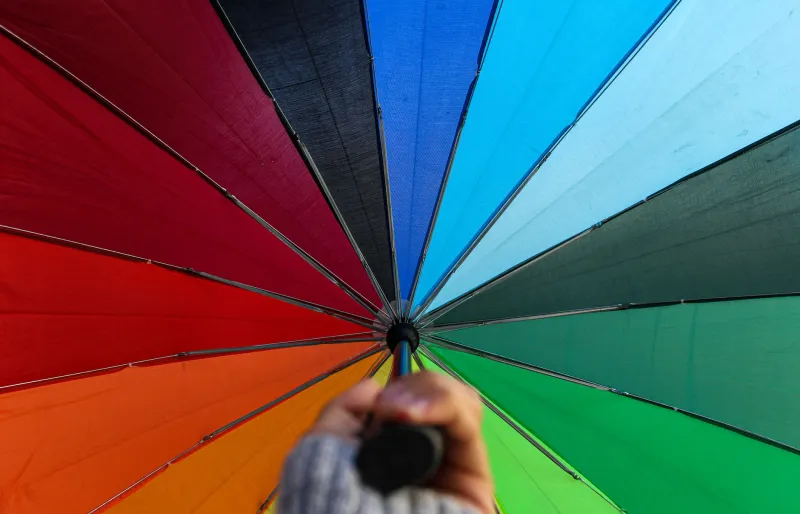
Britain has a healthy relationship with maybe. The forecast says there is a 40% chance of showers, and nobody storms the Met Office demanding a binary answer from the heavens. We sigh, pack a jacket, and get on with it. This is civic maturity. It is also a useful antidote to the way quantum physics gets sold.
Because quantum technology has a communication problem, and it is not the physics. It is the tendency for a carefully hedged research result to arrive in public as a thunderclap of certainty. One day we are told a quantum computer 'could' help design better batteries. The next, a headline insists it 'will'. Somewhere between the lab and the newsroom, a probability forecast has been replaced by a promise of sunshine.
A 40% chance is not a broken forecast
A probability of rain is not a failure to make up the forecaster's mind. It is a compact way of communicating uncertainty. It does not mean 40% of the country will get wet, or that it will rain for 40% of the afternoon. It means that, given the starting conditions and the model, rain is a plausible outcome in four out of ten comparable scenarios.
The British public mostly understands this. We know the difference between 'it might rain' and 'it will rain'. We know that a 20% chance still justifies a small umbrella if the cost of being wrong is a soggy commute. We are, in our damp way, a nation of probabilists.
That is worth remembering when reading quantum press releases. A superposition is not simply a fancy weather forecast with extra spookiness. Quantum theory gives probabilities for measurement outcomes, and those probabilities are not a cover story for ignorance. But the communication lesson stands: an honest maybe is more useful than a dishonest definitely.
Forecasters are in the uncertainty business
Meteorology is not shy about uncertainty. Modern forecasts use ensembles: many model runs with slightly different starting conditions, producing a spread of possible futures. The percentage chance of rain is a summary of that spread. It is updated as new data arrives, verified against what actually happened, and communicated with words such as 'likely' and 'unlikely' that have been tested for public comprehension.
Quantum research has its own ensembles, error bars and confidence intervals. It also has a habit of leaving them in the abstract while the press office reaches for the word 'revolutionary'. The result is a public conversation in which the most interesting part — the uncertainty — is often the first thing to be edited out.
This is not a plea for scientists to sound permanently vague. It is a plea for the same courtesy forecasters extend to us: tell us the probability, tell us what it applies to, and tell us how wrong you might be.
Superposition is not a weather forecast with extra spookiness
There is a common misunderstanding that a quantum computer in superposition is somehow running every possible weather forecast at once. It is not. Quantum algorithms exploit interference and entanglement in ways that are deeply weird and genuinely powerful for some problems. But they do not work like a magical ensemble of every answer, and they do not remove uncertainty from the final measurement.
In 2026, the quantum sector is full of serious work and serious claims. Some of those claims will be borne out. Some will not. The honest ones tend to include words such as 'under certain conditions', 'for specific problems' and 'we do not yet know'. The dishonest ones tend to include the phrase 'unhackable' and a stock photo of a glowing blue sphere.
The press release collapse problem
A weather forecast keeps its uncertainty all the way to your phone. A quantum press release often loses its uncertainty somewhere around the second paragraph. 'Could' becomes 'will'. 'In principle' becomes 'within five years'. 'A small demonstration' becomes 'a breakthrough that changes everything'.
The only wavefunction that collapses in a newsroom is the probability of an accurate headline. This is not because journalists are uniquely foolish. It is because certainty travels faster than nuance, and because the incentives of funding, publicity and page views all point in the same direction: towards the confident version.
Forecasters face the same temptation. 'It might rain' is less exciting than 'STORM CHAOS'. But the Met Office has spent decades building a reputation for probabilistic honesty, and it has learned that trust is more valuable than a dramatic headline. Quantum communication could borrow that lesson without borrowing the weather.
A forecast-style checklist for quantum claims
When a quantum story arrives, try asking the questions you would ask of a weather forecast.
What exactly is being measured? A forecast tells you the chance of rain in a place and a time. A quantum claim should tell you what is being computed, sensed or communicated, and under what conditions.
What is the ensemble? Forecast probabilities come from many model runs. Quantum claims should come with benchmarks, error rates and comparisons to classical methods. One impressive demonstration is not a climate.
What are the error bars? If a result cannot be reproduced, it is not a forecast. It is a rumour with a graph.
What is the cost of being wrong? We pack an umbrella because being wet is worse than carrying a bit of extra weight. Quantum hype should be judged by the cost of betting on it: money, policy, public patience.
Is 'may' doing the work of 'will'? This is the big one. If the sentence collapses when you remove the word 'could', it was never a prediction. It was a vibe.
The umbrella test
A good forecast does not tell you that it will definitely rain. It tells you that rain is likely enough to justify a brolly. A good quantum claim should do the same: tell us what is likely enough to justify investment, regulation or excitement, and what remains genuinely uncertain.
Britain is well equipped for this. We are a nation that understands drizzle, probability and the value of a spare carrier bag in a coat pocket. We do not need quantum physics to be sold as certain. We need it to be sold honestly, with the error bars attached and the word 'maybe' left where it belongs.
The most honest quantum sentence of 2026 might be this: there is a reasonable chance this technology will matter to your industry within a decade, and a near-certain chance someone will call it revolutionary before lunch. Bring a brolly. Read the small print. And remember that a 40% chance is not a failure of science. It is often the most useful thing science can tell you.