Lines, Lenses and Liability: Why Offside Will Never Need a Qubit

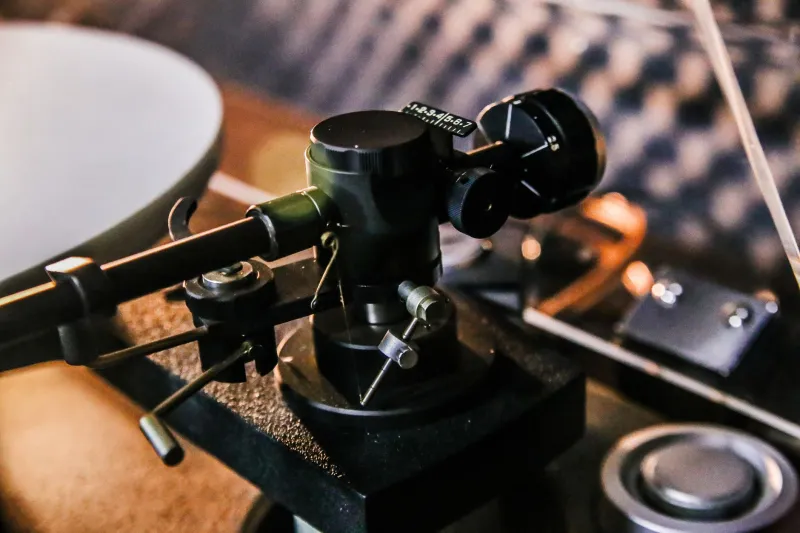
Photo: Noah Salzman, CC BY-SA 4.0, via Wikimedia Commons
The argument starts, as it always does, with a freeze-frame and a pint. Someone has drawn a line across a defender’s heel, someone else has drawn a line across an attacker’s shoulder, and the table has split into two factions. Then a voice from the corner says the words that haunt every sceptic: ‘Why don’t they just use quantum computing?’
It is a fair question in the sense that it is a question. It is not a fair question in the sense that it points at the right tool. Offside decisions in elite football look complicated because they arrive wrapped in anger, slow-motion replays and a rulebook written by committee. But complicated is not the same as computationally hard. A VAR check is not a climate model with a whistle.
The 22-player alibi
Football is good at making small problems look enormous. Twenty-two players, one ball, several cameras, a few dozen frames and a rule about which part of the body can be used to score. That is a lot of moving parts to a fan in the stands. It is not a lot of moving parts to a laptop.
Classical computers are extremely good at geometry, tracking and image processing. They have been doing it for decades. The idea that a Premier League offside check needs the kind of machine that lives behind a wall of stainless steel and a cryostat is a category error dressed up as ambition. You do not need to exploit quantum interference to work out whether a knee was ahead of a toe. You need a decent camera, a reliable timestamp and an agreed definition of ‘a toe’.
In 2026, the technology stack around elite football is more sophisticated than ever. Tracking systems, semi-automated offside tools and broadcast cameras generate a lot of data. But volume is not the same as computational intractability. A system can produce thousands of data points per second and still be solved by ordinary silicon. The hard part is not the arithmetic. The hard part is trusting the picture.
What the argument is actually about
Most VAR controversies are not really about processing power. They are about calibration, occlusion, frame timing, perspective and the rulebook. Was the camera square to the line? Was the frame chosen at the exact moment the ball was played? Was the attacker’s arm offside but not the part that can legally score? Did the defender’s deliberate touch reset the phase of play, or was it a deflection?
These are measurement and governance questions. They are the sort of questions that make engineers reach for calibration certificates and rule-makers reach for clearer drafting. They are not the sort of questions that make physicists reach for a qubit.
A quantum computer cannot invent a better camera angle. It cannot recover a frame that was never captured. It cannot decide whether ‘interfering with play’ means standing in the goalkeeper’s eyeline or merely existing in the same postcode. Those are human and technical problems, and they do not become easier just because you put the word ‘quantum’ in front of them.
A qubit is not a calibration certificate
Quantum computers are genuinely interesting machines. They may one day help with certain problems in chemistry, materials science and cryptography. But they are not magic. They need pristine inputs, error correction and a very cold room. Asking a qubit to adjudicate a toe is like asking a Michelin chef to settle a dispute over a crisp packet.
The economics are also upside down. A dilution fridge costs a fortune to buy, run and keep cold. It needs specialist staff and a steady supply of helium. If the goal is to make offside decisions more consistent, the cheaper intervention is better calibration, more camera angles and transparent uncertainty. A quantum computer would be a very expensive way to be told that the camera was slightly off-axis.
The rulebook is the real superposition
Here is the uncomfortable truth: the offside law often behaves like it is in two states at once. A player can be ‘active’ and ‘not active’, ‘interfering’ and ‘not interfering’, depending on who is explaining it after the match. A qubit can be 0 and 1. A law can be ‘clear and obvious’ and ‘anyone’s guess’ at the same time.
No amount of compute can collapse that ambiguity into a single state. That is a job for the lawmakers. If the wording is fuzzy, the decision will be fuzzy, and the technology will simply produce a sharper image of the fuzz. Britain’s football authorities should spend their energy on consistent interpretations, published reasoning and better training for officials. A quantum computer cannot referee a philosophical argument.
Where quantum might actually help, a bit
There is a legitimate quantum angle, but it is not the one most pub theorists have in mind. Quantum sensing is a different cupboard from quantum computing. Better clocks and precision sensors can help with timing and synchronisation. But elite football already has access to extremely good timing systems. The marginal gain from a quantum sensor is unlikely to settle the argument about a defender’s trailing heel.
If football wants better measurement, it should buy better measurement. That means calibrated camera rigs, robust timestamping, clear protocols for choosing frames and a public account of the uncertainty involved. Those are unglamorous purchases. They do not come with a press release about the future of computing. They do, however, address the actual problem.
A sensible shopping list
Before anyone signs off a quantum computing pilot for VAR, they should ask a few simple questions. Which variable is the quantum machine supposed to solve faster? What classical method has been benchmarked against it? What is the error rate? Who calibrates the input data? What happens when the rulebook changes? If the answers are vague, the pilot is not a pilot. It is a press release with a plug.
A better shopping list for British football would include more calibration targets, independent audits of camera setups, consistent frame-selection rules and clearer explanations to fans. It would include training for officials on the awkward cases that make the law feel like a riddle. It might even include a plain-English guide to what ‘clear and obvious’ means, although that may be too ambitious for any technology.
Final whistle
Offside is not a compute problem. It is a measurement problem, a governance problem and, occasionally, a communication problem. Quantum computing will not fix Britain’s offside calls because the calls are not waiting for a faster machine. They are waiting for better cameras, clearer rules and someone brave enough to explain the uncertainty.
The next time a mate suggests a qubit for VAR, ask them which variable it solves and who calibrates the lens. If the answer is a shrug, the technology budget should stay in the real world. The pub can keep the superposition.