The Skip Doesn't Take Helium: Britain's Quantum Decommissioning Blind Spot
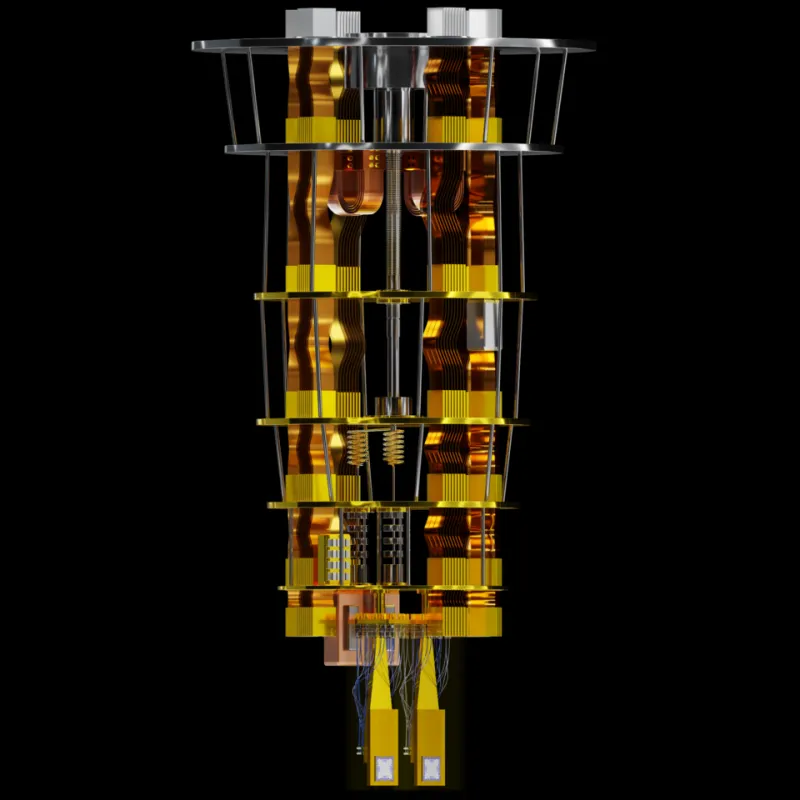
Somewhere in Britain, a dilution fridge is waiting for a skip permit. It is not a metaphor. It is a large, expensive, mildly terrifying object that has done its job, been superseded, or been gutted for parts, and now needs to go somewhere. Your local household waste recycling centre will not thank you. Nor, in fairness, should it.
The quantum boom has a front door problem and a back door problem. The front door gets the ribbon-cuttings, the ministerial visits and the photographs of someone in a lab coat holding a wafer like a communion crisp. The back door gets the decommissioning paperwork. As of November 2026, Britain can talk fluently about qubit counts, error correction and sovereign capability. Ask what happens to the hardware when the grant ends and the conversation develops a slight chill.
The Fridge That Ate the Loading Bay
A dilution refrigerator is not a boombox. It is a cryogenic plumbing system with a taste for helium-3, specialist wiring, vacuum hardware and a support stack that can dominate a room. When it dies, or when a lab upgrades, you cannot wheel it into the goods lift and hope for the best. Someone has to drain it, document it, dismantle it, decide which bits are reusable, which bits are contaminated, and which bits are simply heavy.
That is before you get to the electronics. Quantum labs generate a remarkable amount of bespoke kit: pulse generators, amplifiers, microwave chains, custom boards, cables that cost more than a used hatchback. Some of it is ordinary commercial e-waste. Some of it is not. Some of it carries intellectual property. Some of it carries a faint whiff of 'please don't put that in a bin bag'.
Helium Is Not a Skip Problem
Helium is the awkward guest at the decommissioning party. Labs are increasingly careful about recovery, because helium is finite, expensive and politically awkward to waste. But recovery is not the same as disposal. A credible decommissioning plan needs a helium account: what came in, what is recoverable, what is lost in service, and what happens when a facility closes. If that sounds boring, consider the alternative: a sector that boasts about cryogenic efficiency while quietly venting the atmosphere's least replaceable party trick.
The same applies to refrigerants, vacuum oils, lead shielding, and the general assortment of materials that make a quantum lab feel less like a software startup and more like a very cold plumbing merchant.
The Paper Trail Has a Cold
In the UK, commercial waste is not a matter of borrowing a neighbour's wheelie bin. Businesses have a duty of care, waste contractors need the right permits, and the Environment Agency takes an interest in how specialist streams are handled. WEEE regulations cover electrical and electronic equipment, but quantum hardware does not always arrive in a neat category. Is a cryostat a fridge? Is a custom rack a computer? Is a dead qubit chip a semiconductor, a hazardous material, or an awkward souvenir?
The honest answer is: it depends. That is precisely why the sector needs visible, shared guidance rather than a thousand lab managers inventing their own spreadsheets. The risk is not that every lab is dumping niobium into a hedge. The risk is that responsibility gets outsourced to specialist contractors, which is fine, but then disappears from public view. Outsourcing the mess is not the same as solving it.
Green Shoots, Grey Cupboards
Quantum computing often gets a green gloss: fewer flights, better batteries, new materials, smarter grids. Some of that may prove true. But the lifecycle of the hardware is part of the ledger. A machine that needs a dilution fridge, a cleanroom, a supply chain of rare materials and a specialist waste chain does not get to call itself environmentally neutral because its algorithm is elegant.
That does not make quantum hardware uniquely dirty. It makes it hardware. Britain's broader tech sector is already wrestling with e-waste, refurbishment and the difference between recycling and downcycling. Quantum should not get a pass simply because the objects are cold and the diagrams are pretty.
What a Credible Exit Looks Like
A sensible decommissioning plan is not glamorous. It looks like an asset register that includes the fridge, not just the qubits. It looks like helium accounting, reuse targets, a named waste route and a published lifecycle assessment. It looks like shared facilities for refurbishing cryostats rather than every lab buying its own and then paying someone to take it away. It looks like grant conditions that ask for an exit plan before the ribbon is cut.
None of that requires a new quango. It requires the same scepticism the sector applies to error rates to be applied to its own cupboards.
The Soup Test
Quantum Soup's test is simple: if a technology cannot explain its messy bits, it is probably hiding them. The messy bit here is not that quantum labs produce waste. Everything produces waste. The messy bit is that Britain's quantum story is still mostly told as a one-way journey: investment in, wonder out. The back door rarely gets a paragraph.
So here is a modest proposal for the next lab opening. Cut the ribbon, yes. Then point at the skip. Explain where the old fridge went, who took it, what was recovered and what was buried. If the answer is a confident shrug, the green credentials are not wrong so much as unfinished. And a skip, unlike a qubit, does not care about superposition.