A Bowl of Nothing: What Quantum Soup Really Tastes Like
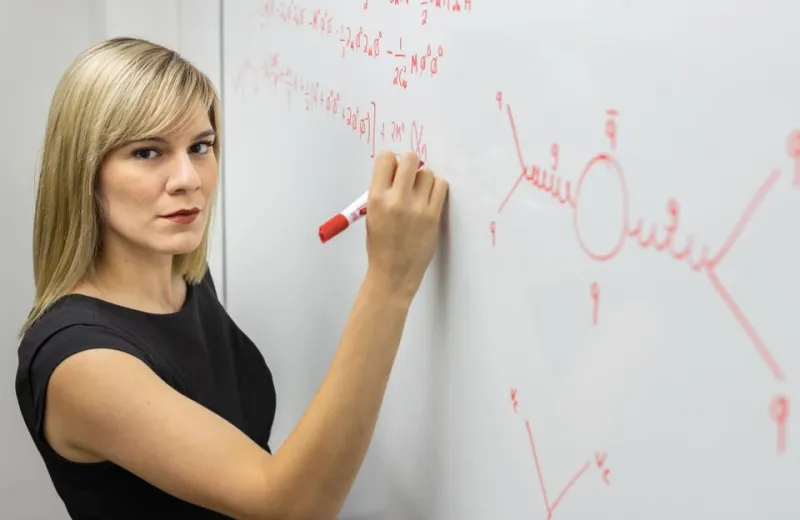
Photo: Oak Ridge National Laboratory, CC BY 2.0, via Wikimedia Commons
The stockpot of reality
Ask a physicist what empty space is made of and you may get a shrug, a lecture or a cup of tea. Ask a quantum field theorist and you will get a stockpot. In quantum field theory, the universe is not built from tiny billiard balls rattling around a void. It is built from fields: electron fields, photon fields, quark fields, and so on. A particle is not a little lump sitting in the field; it is an excitation of it, a ripple, a bubble, a hot spot in the broth.
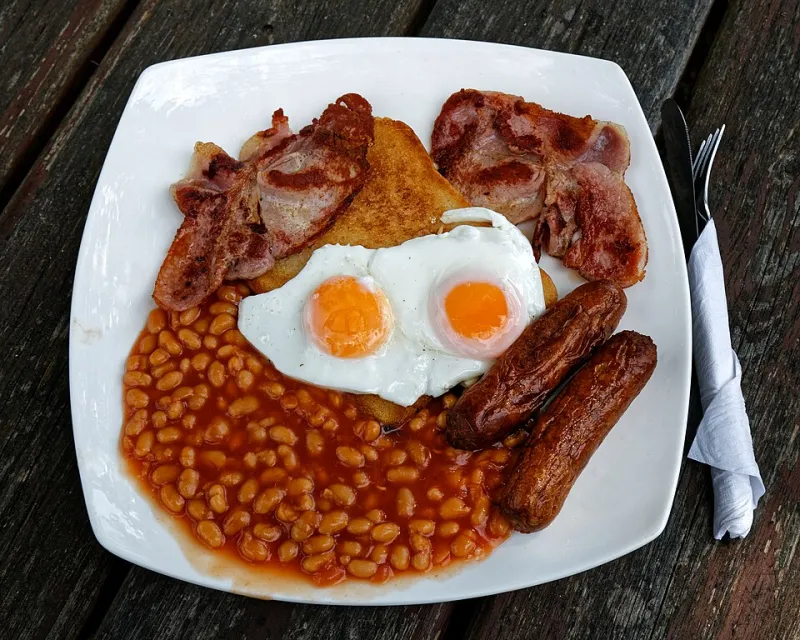
This is where the Quantum Soup metaphor earns its keep. The field is the stock. The particles are the things that rise to the surface. The vacuum is not an empty pot; it is the lowest-energy state of the stock, which is still a busy place. Empty space, in this picture, is not nothing. It is something with the lid on.
Why the broth bubbles
Quantum field theory does not say that empty space is packed with tiny particles popping in and out like croutons in a lava lamp. That is the popular version, and it is a useful cartoon. More carefully, the vacuum has fluctuations. Fields do not sit perfectly still at zero. The uncertainty principle puts limits on how precisely a field and its rate of change can be pinned down, and the lowest-energy state still has a kind of quantum jitter.
Those fluctuations are not just philosophical decoration. The Casimir effect is the classic demonstration: put two uncharged plates very close together in a vacuum and they can feel a tiny force, because the field modes between them are restricted compared with the modes outside. The Lamb shift in hydrogen is another sign that the vacuum is not a silent, inert background. Virtual particles are a bookkeeping device for these effects, not ingredients you can fish out with a slotted spoon. The broth is real; the bubbles are a way of talking about the maths.
The UK kitchen: clocks, sensors and qubits
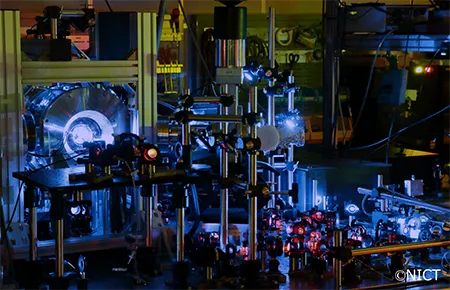
British labs are not literally stirring a cosmic broth, but they are trying to coax quantum fields into useful behaviour. At the National Physical Laboratory and across the UK's quantum research hubs, scientists use the quantum states of atoms, ions and photons to build clocks, sensors and computing components. Atomic clocks rely on transitions between energy levels: tick, tock, but with lasers and vacuum chambers. Quantum sensors can measure gravity, magnetic fields and time with absurd precision. Quantum computers use qubits, which need to be isolated from the environment long enough to do something useful before decoherence turns the broth back into ordinary classical soup.
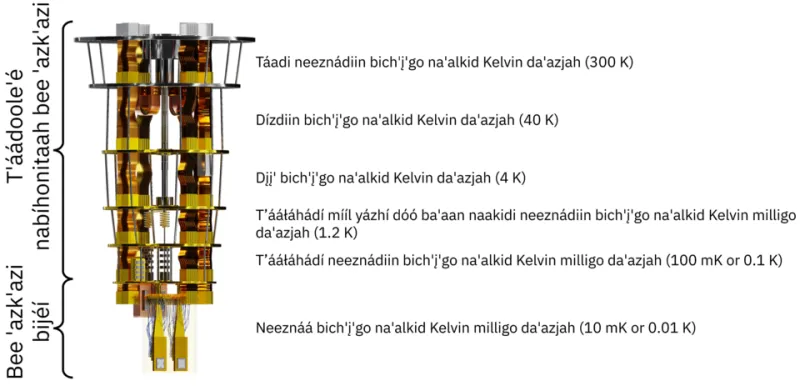
A lot of the cooking is actually cooling. Dilution refrigerators, vacuum chambers and laser cooling are the pots and pans of the quantum kitchen. The aim is not to make the soup weirder; it is to keep the weirdness from leaking away. That is the unglamorous truth behind a lot of quantum technology: the hard part is not the philosophy, it is the plumbing.
Sceptical sidebar: hold the garnish
Genuine quantum weirdness includes superposition, entanglement, quantised energy levels and vacuum fluctuations with measurable consequences such as the Casimir effect. If a claim rests on those, ask for the experiment, the error bars and the peer review.
Marketing garnish is different. 'Quantum water', 'quantum wellness' and 'quantum energy' often use the word as a spice rather than a description. The useful test is simple: if a product says quantum but cannot say what is quantised, put it down. A quantum leap is also not a big jump; it is a transition between discrete energy levels. If an advert uses it to mean 'revolutionary', it has already dropped the ladle.
Taste test
The soup metaphor is good for one big idea: empty space is not an empty stage. It is a field in its lowest energy state, and that state has structure. But metaphors have limits. A bowl of soup is classical. You can stir it, taste it and send it back. A quantum field is a mathematical object that happens to produce the most accurate predictions humans have ever made. The broth is not made of tiny meatballs. It is made of rules.
Still, the image is hard to resist. The universe is a kitchen that never closes, and UK labs are trying to cook with the steam. They are building clocks that would not drift if you left them running for billions of years, sensors that can feel a whisper of gravity, and qubits that need to be colder than deep space. No actual soup was harmed. The garnish, however, should be left on the side.