Certified Shuffle: Why a Quantum Dice Roll Still Won't Pick Your Numbers
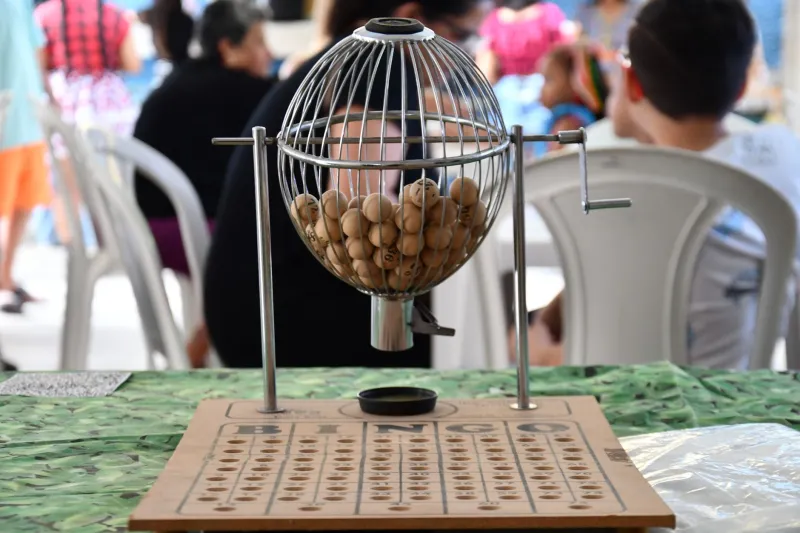
The balls have names. On a Saturday night, when the National Lottery draw clatters out of the television, the hardware doing the work belongs to a small family of mixers with Arthurian monikers — Merlin, Arthur and assorted Round Table colleagues. They are gorgeous, faintly ridiculous pieces of engineering, and they are also, in the grand scheme, a posh tumble dryer for numbered spheres.
Which raises the question that arrives every few years with a press release attached: shouldn't a modern lottery be using quantum randomness? Isn't a quantum random number generator, humming away in a cryostat somewhere, precisely the upgrade a national draw deserves?
Short answer: it wouldn't help you. Slightly longer answer: it might help the lottery, in a narrow, unglamorous, cryptographic sense — and that gap between the two answers is where most 'quantum randomness' marketing quietly dies.
What a quantum random number generator actually is
Strip away the branding and a QRNG is a small device that extracts bits from a quantum measurement: a photon hitting a beam splitter, a polarisation measured along a chosen axis, a noise source run close to its quantum limit. The outcome of a single measurement is not merely unknown to you — according to quantum mechanics it isn't settled in advance anywhere in the universe. Decades of Bell tests have closed the loopholes that would let a hidden instruction set smuggle the answer in.
Contrast that with the pseudo-random generator inside your laptop. It is deterministic: feed it the same seed and algorithm and you get the same sequence, forever. It looks like static, but the pattern is written down. A QRNG's output is not written down. That is a genuinely valuable property when you are generating cryptographic keys, nonces, or simulation inputs that a hostile party would love to reconstruct.
Certified random is not the same as fair
'Certified randomness' is a claim about a device. It means someone with a clipboard has established that the source produces uniformly distributed, unpredictable, tamper-resistant bits — and that the process by which this was established is documented and repeatable. Note what is missing from that sentence: any word about games, prizes or players.
Fairness is a property of a set of rules. Every combination equally likely. Every entrant equally placed. The whole apparatus auditable from the ball weigh-in to the payout. A biased mechanical draw can be made fairer through procedure — ball inspection, machine rotation, independent observers, a public pre-draw check. Conversely, a flawless quantum generator can be bolted onto a rigged game, and the game stays rigged. Randomness is not a moral quality.
It's also worth saying plainly that the existing kit is decent. Studies of physical ball draws do find small biases — a worn ball here, a loading-order effect there — but nothing resembling a practical exploit, and the drawing protocols already exist to average those out: several machines, several ball sets, selected at random moments before the draw.
The odds do not care who is watching
Here is the part that matters. Swapping in quantum randomness changes the distribution of numbers only in the direction of more perfectly uniform, and your odds of matching six from 59 were already one in 45,057,474. Nudging uniformity from 99.99% to 100% does not move your expected value by a penny. That ticket still returns, on average, about half of what you paid for it.
The confusion is between unpredictability and favour. Quantum randomness is unbeatable unpredictability — but if every outcome is exactly equally likely, including the six you picked and the six you didn't, then nothing about how the numbers were generated can lean probability towards your slip of paper. There is no mechanism for it. The hot-numbers wall chart in the corner shop, the 'it's due' instinct, the friend who swears by birthdays: all of them are attempts to find structure in a uniform distribution, and quantum mechanics is the last place on earth you will find any.
Where quantum randomness genuinely earns its keep
There are real deployments, and they are mostly unglamorous. Quantum key distribution needs a fresh supply of keys. Some cloud providers sell QRNG-sourced entropy as a service. Certified QRNG chips sit inside payment and identity hardware. Clinical trials use them for allocation schedules. In each case the threat model is an adversary who can guess your numbers: predictable keys mean a breach, predictable allocation means a compromised trial.
A lottery with a predictable draw is fraud. A casino with predictable shuffling is theft. But the honest description of most 'quantum-powered' casino randomness is that the operator has bought entropy from an API and pointed at it in the marketing. That may be a perfectly respectable source of bits — it just isn't what makes the game fair. The game is fair if the payout structure, the return-to-player and the rules are what they claim, and an independent lab has checked.
How quantum gadgets fail (quietly)
QRNGs are hardware, and hardware drifts. Detectors degrade, sources dim, entropy estimators get fooled, and a device certified as healthy a year ago can start dribbling out low-entropy bits while still cheerfully reporting all systems go. This is why the standards work — the guidance published by bodies like BSI and NIST on entropy sources and how to test them in situ — matters far more than the sticker on the box. A broken quantum source emitting biased bits is considerably worse than a dull software generator that passes its statistical tests every hour.
And remember the rate. A QRNG produces a finite trickle of bits per second; a draw needs a handful. You do not require a laser and an interferometer for that. You require a sealed envelope, a camera, a public audit and a decent shuffling algorithm.
What to do with the quantum sticker
Three questions, every time. First: what exactly is quantum here — the source of the numbers, the transmission, the sensing, or just the logo? Second: who certified it, against which standard, and when was it last audited? Third: what property are they claiming it grants — unpredictability, uniformity, or fairness? If the answer to the third is fairness, ask to see the rules and the payouts instead, because that is where fairness actually lives.
The Lottery doesn't need a randomness upgrade. It needs the thing it already has: a transparent process, inspected equipment, and an honest one-in-45-million printed on the back of the ticket where you can read it. That isn't a quantum leap. That's just a fair game — and no quantity of photons in a beam splitter will change what's in your hand at 8pm.
Which is a shame, because 'quantum' would look lovely on the ticket. The £2 costs the same either way.