Swingometer, Interrupted: Why the Next Election Won't Be Decided by a Qubit
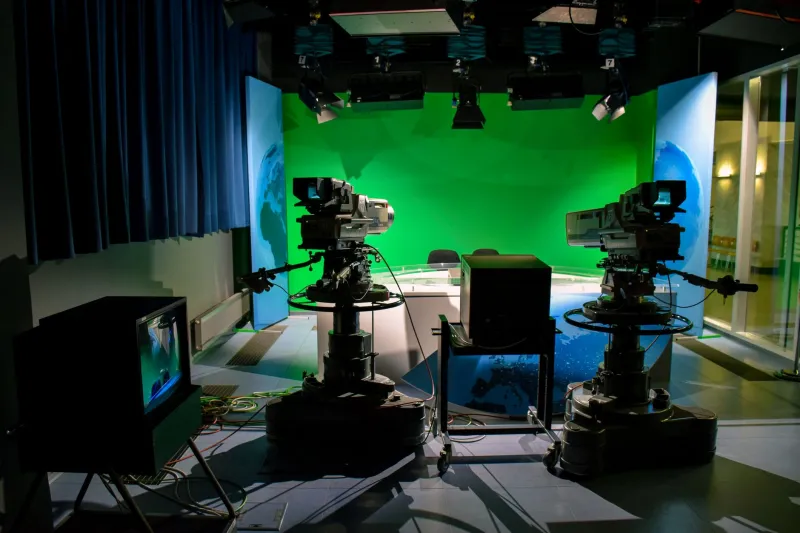
There is a particular look that comes over a certain kind of technology executive around 10pm on election night. It is the look of a person who has spotted a bandwagon with a spare seat. The swingometer is doing its swaying, the exit poll has landed, and somewhere behind the studio lights a producer is being told, in a hushed voice, that a quantum computer could have called this seat hours ago.
It could not. But the pitch is now a fixture of British public life, so let's take it apart in the calm manner it deserves.
First, what a quantum computer can actually chew on
Strip away the marketing and a quantum machine is a device for manipulating probability amplitudes. Feed it a problem that maps neatly onto those amplitudes — factoring, certain simulation tasks, some sampling problems — and, in principle, a sufficiently large and sufficiently error-corrected machine does something a classical computer finds punishing.
Election forecasting is not one of those problems. There is no natural Hamiltonian for "disaffected leave voter in a Nottinghamshire marginal". Nobody has found a way to load a 40,000-respondent survey into a quantum register without spending more time on the data entry than on the computation. And the algorithms people usually gesture at — optimisation routines for finding the "best" arrangement of seats, parties and resources — are exactly the ones where classical heuristics have spent fifty years getting extremely good at being boringly adequate.
This is not a scandal. It is just a category error, like buying a particle accelerator to shell peas.
The awkward maths of asking people questions
The dirty secret of political polling is that the computational part was never the hard part. Weighting a sample of a thousand people to a known demographic profile is arithmetic you could do on a spreadsheet from 1998, assuming the spreadsheet had opinions about Educational Attainment and the mortgage belt.
The hard part is everything around it. Who answers the phone. Who has quietly stopped answering the phone. Who tells the pollster one thing and the ballot box another. The margin of error on a national poll is a couple of points; the margin of error on what people mean when they say they'll definitely vote is roughly the width of the Irish Sea.
Quantum computing does not fix non-response bias. It does not unnaturally weight a 22-year-old renter in Bristol who is refusing to pick up a number he doesn't recognise. It cannot tell you whether the shy Tory effect is real, imaginary, or a thing psephologists invented to explain 1992 to themselves. Those are problems of measurement and human cussedness, and they are stubbornly classical.
MRP is doing fine, thanks
One of the more impressive developments in British electoral analysis is multilevel regression and post-stratification — MRP to its friends — which uses large surveys and census-style data to estimate results constituency by constituency. In 2024 it performed creditably against the actual result, and it did so on ordinary silicon, with a lot of fiddly statistics and an unglamorous amount of spreadsheet time.
Could a quantum computer speed up an MRP model? Possibly, in the way a sports car can speed up the school run. The bottleneck is the model's assumptions, the quality of the constituency-level data, and the fact that the electorate keeps changing its mind. Amdahl's law is a cruel mistress: parallelise a computation all you like, the bit where you wait for the fieldwork to come back is still going to take a fortnight.
How to spot a quantum swingometer pitch
Election cycles are a buyer's market for nonsense, so here is a short field guide. You are in the presence of hype if any of the following appear:
- A slide with the word exponential on it and no specification of which quantity is growing, or relative to what.
- A claim that a quantum algorithm will "search all possible parliaments simultaneously". Grover's algorithm gives a quadratic speed-up on unstructured search, and the last time anyone checked, the space of plausible cabinets was not a well-defined search space with a known size.
- A pilot study with no baseline. If the quantum result is not compared against a decent classical model on the same data, it is not a result, it is a demonstration.
- The phrase "we're not saying it will replace polling". They are absolutely saying it will replace polling.
- Anyone using the word unhackable in a sentence about a system that touches the internet.
What would actually improve forecasting
Unfashionable things. More money for fieldwork, so pollsters can afford to chase the people who never answer. Better sampling frames as landlines finish their long retirement. Transparency about herding — the tendency for pollsters to cluster around a consensus so as not to look silly. Better communication of uncertainty, so that "too close to call" is reported as a finding rather than an apology.
And, ideally, a moratorium on describing voter behaviour as a superposition. It isn't. Voters are not undecided in the quantum sense; they are undecided in the sense that they haven't read the leaflet yet and it's raining.
The swingometer survives
None of this is an argument against quantum computing. Britain's national programme is doing serious work on sensing, clocks, networking and the genuinely hard engineering of error correction, and there are problems in chemistry and materials science where the eventual payoff is real. But elections are a stress test for a society's measurement apparatus, not for its hardware. When the exit poll lands at 10pm, the thing being tested is the fieldwork and the modelling, not the coherence time of a transmon.
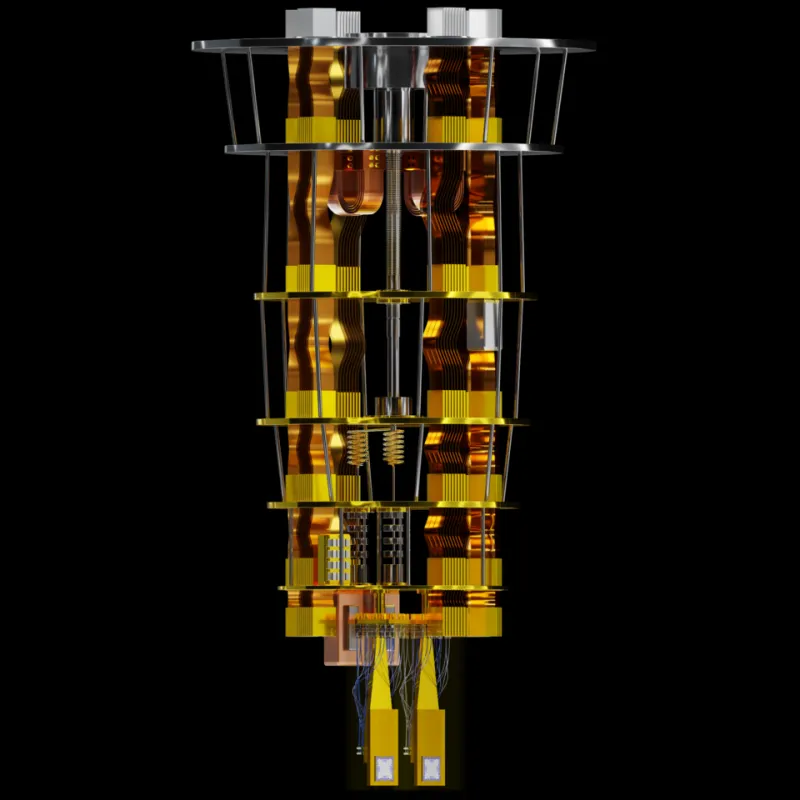
So by all means, enjoy the graphics. Enjoy the giant arrow squeaking across a map of the Home Counties. Enjoy the returning officer in a chain of office reading out a number that everyone in the room already knew. Just don't expect a dilution fridge to call the result. It has enough on its plate staying at ten millikelvin, and it has never once expressed an opinion about a marginal seat in Bognor.
Bring a pencil. Bring a raincoat. Leave the qubit at home.