The Appointment Lottery Has a Spreadsheet: Auditing Britain’s Quantum Scheduling Sales Pitch

There is a particular smell in NHS scheduling meetings. It is part stale coffee, part laminated pathway map, and part the quiet desperation of someone staring at an outpatient diary that looks less like a plan and more like a spreadsheet with anxiety.
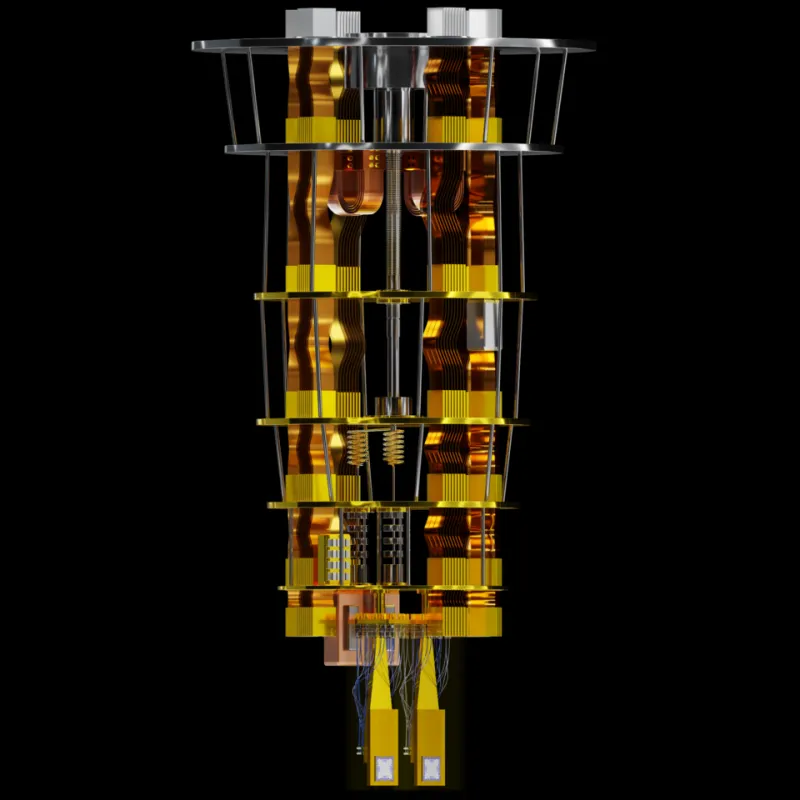
Into this room, in 2026, walks a vendor. They have a slide deck. The slide deck has a glowing sphere on it. They say the words quantum-inspired optimisation, and suddenly the waiting list is not a management problem but a physics problem. Which is flattering, because physics sounds expensive and therefore serious.
Let us be clear: scheduling is a genuine combinatorial problem. Appointments, rooms, staff, equipment, travel, urgency, patient preference, cancer pathways, follow-ups and the fact that Mrs Patel cannot do Tuesdays — these are constraints. Constraint-satisfaction is hard. But hard is not the same as quantum. And a hard problem does not automatically require a dilution fridge.
The diary is not a wavefunction
A waiting list is not a quantum state. It does not exist in superposition until someone opens the letter. It is a queue. A queue with clinical priority, legal duties, data protection obligations and a very human cost when it goes wrong. The fact that a scheduling problem can be written as a mathematical optimisation does not make it quantum. A shopping list can be written as a mathematical optimisation too. Nobody is building a cryostat for your weekly shop.
The honest version of this technology is classical software. It may use heuristics, local search, constraint programming, simulated annealing, genetic algorithms or methods inspired by physics. Some of it is genuinely clever. Some of it can absolutely improve scheduling. But the word quantum-inspired is doing a lot of work, and procurement teams should ask it to show its timesheets.
What ‘quantum-inspired’ actually means
In practice, quantum-inspired software usually means one of three things. First, a classical algorithm that borrows ideas from quantum mechanics — tensor networks, for example — and runs on ordinary hardware. Second, a classical heuristic with a new coat of paint and a press release. Third, an actual quantum computer being used somewhere in the pipeline, usually for a small subproblem, usually in a demonstration, and usually not for the thing you thought you were buying.
None of these is automatically dishonest. Tensor-network methods can be powerful. Classical heuristics can beat existing schedulers. Real quantum hardware may one day matter for some optimisation problems. But the NHS is not buying a physics experiment. It is buying appointments. The burden of proof is therefore practical: does this system produce more usable slots, fairer allocation, fewer cancellations and better clinical outcomes than the current process, within the constraints that actually exist?
If the answer is yes, congratulations: you may have bought good classical software. That is fine. It does not need to be quantum to be useful. It just needs to be honest.
What an NHS pilot can realistically test in 2026
A pilot on twenty appointments is not a pilot. It is a demo with biscuits. A meaningful pilot should test the scheduler against a strong baseline — the current process, or a well-tuned classical optimiser — using real historical demand and real constraint data. It should run in shadow mode alongside human schedulers, not replace them, and it should be judged on pre-agreed metrics: utilisation, waiting time, cancellations, inequity across patient groups, staff time saved, and the number of times the system suggests something clinically absurd.
It should also test failure modes. What happens when the data is incomplete? What happens when a consultant goes off sick? Can the scheduler explain why it chose one patient over another? Can it handle urgent cancer pathways without quietly deprioritising them? Does it run fast enough for the booking office, or does it need a cloud queue longer than the outpatient queue?
And please, test the integration. A brilliant optimiser that cannot talk to the trust’s patient administration system is not an optimiser. It is a very expensive screensaver.
A procurement checklist for the suspicious but busy
Here is a short list you can carry into the meeting, ideally laminated:
- Name the algorithm. Not the brand. Ask what mathematical method is being used and where it runs. If the answer is a quantum computer, ask which one, how many qubits, what error rates and what the cloud bill looks like.
- Demand a classical baseline. Compare against the current scheduler and at least one strong classical method. A quantum-inspired tool that cannot beat a decent heuristic is not ready.
- Ask for the constraints. If the demo ignores staff breaks, room cleaning, travel time or clinical priority, it is not a scheduling demo. It is a puzzle.
- Insist on historical replay. Run the system on last year’s real referrals and appointments. Check whether it would have made things better or just differently bad.
- Pre-register the metrics. Decide what success means before the pilot starts. ‘Improved efficiency’ is not a metric. It is a mood.
- Check explainability. Clinicians and schedulers need to know why a slot was chosen. A black box that says ‘trust me, I am quantum’ is not a clinical governance strategy.
- Follow the data. NHS data is sensitive. Ask where it goes, who processes it, how long it is kept and whether the vendor’s security posture is better than a Post-it note.
- Price the exit. Ask what happens if the pilot fails. Can you get your data back? Can you leave without paying for a three-year ‘quantum transformation partnership’?
- Beware the advantage claim. Quantum advantage in optimisation is not a settled supermarket product. It is a research frontier. Anyone claiming it for NHS rostering in 2026 should bring evidence, not adjectives.
The soup test
Quantum Soup’s test is simple. If the pitch is mostly physics, ask for the spreadsheet. If the pitch is mostly spreadsheet, ask where the quantum is. A good vendor will answer both questions without breaking eye contact. A bad one will start talking about the ‘art of the possible’ and hope the tea trolley arrives.
The NHS does not need a wavefunction. It needs a scheduler that respects constraints, explains itself, integrates with the plumbing and can be audited by someone who is not a physicist. That is not a glamorous sales pitch. It is, however, a rather good appointment.