Help Wanted: Must Remain Calm Near a Dilution Fridge
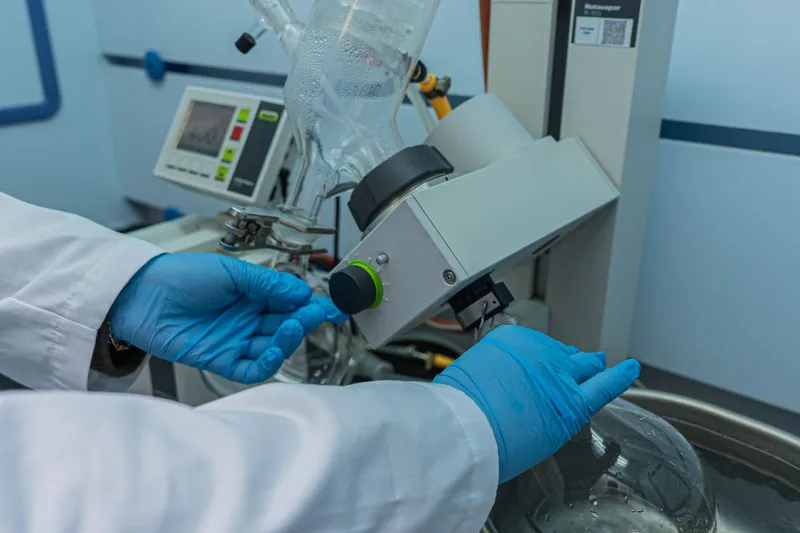
There is a moment on every quantum lab tour when the conversation reaches the dilution refrigerator. Everyone leans in. Someone says “millikelvin” in the hushed tone usually reserved for cathedral naves. The fridge glows with an aura of expensive seriousness, all gleaming plates and coiled cables, like a pagan altar built by an aerospace supplier.
Then the lab manager points at the person who actually keeps it alive: a technician with a torque wrench, a helium leak detector and the expression of someone who has seen a wiring loom go feral. That person is the story. They are also the person nobody puts in the press release.
The celebrity fridge and the unglamorous van
Britain's quantum ambitions are usually sold with chips, qubits and carefully lit photographs of hardware that looks like a chandelier designed by an accountant. Fair enough. But a quantum computer is, among other things, a cryostat with a scheduling problem. It needs vacuum systems, radio-frequency electronics, wiring, software, mechanical fitting and someone who can diagnose a blocked capillary at an unhelpful hour.
These are not “quantum skills” in the headline sense. They are trades with a physics gloss. The same instincts that keep MRI scanners, particle accelerators and semiconductor fabs running also keep quantum labs from becoming very cold, very expensive cupboards.
Call them quantum plumbers. Not because they fix sinks, but because they understand that the glamorous bit only works if the unglamorous bit does. The fridge does not care about your PhD. It cares whether the seals are sound and whether someone remembered to order the right gasket.
What the job adverts miss
Look at the skills that quantum labs genuinely need and a pattern emerges: cryogenics technicians, vacuum specialists, electronics engineers, mechanical fitters, control-systems people, and software engineers who can talk to hardware without setting it on fire. Add patience, documentation habits and a high tolerance for being interrupted by a graph that has gone sideways.
None of this is mysterious. It is also not especially new. The UK already has people with these skills in universities, national labs, medical physics departments and industrial refrigeration. The question is whether the quantum sector can recruit them, train them and — the bit everyone forgets — keep them.
Whether there is a formal skills shortage is harder to pin down than a helium atom. Anecdotes are plentiful. A lab manager will tell you it took months to fill a technician post. A recruiter will tell you the market is tight. A strategy document will tell you skills are “critical.” What is scarcer is a clear, public map from “school leaver with a multimeter” to “person trusted with a seven-figure fridge.”
The apprenticeship-shaped hole
Britain has doctoral training centres, university quantum hubs and a healthy supply of PhD students who can explain decoherence at a party. Excellent. But a PhD pipeline is not a workforce pipeline. A quantum sector needs rungs below the PhD rung: apprenticeships, Higher National qualifications, industry placements, and mid-career routes for people coming from aerospace, pharma or telecoms.
There are schemes. Universities run technician apprenticeships. The National Quantum Strategy nods towards skills. Various programmes promise to build the workforce. But if you go looking for a straightforward “quantum cryogenics technician” apprenticeship, you may find a lot of PDFs, a webinar and a stakeholder map. The missing middle is not a moral failure; it is a design problem. The UK has spent years funding the top of the pyramid and hoping the bottom appears by magic.
Cold hands, lukewarm career ladder
Training is only half the job. Keeping technicians is the other half. A skilled cryogenics technician can often earn more in data centres, pharmaceuticals or industrial gas. Quantum labs offer interesting work, decent colleagues and the chance to explain to visitors that no, the fridge is not a server. But interesting work does not pay the mortgage.
If Britain wants a quantum workforce, it needs to treat these roles as careers, not support acts. That means pay bands, progression routes, recognised qualifications and maybe a national register of people who can be trusted near a helium recovery line. It also means not assuming that every technically brilliant person wants to spend three years writing a thesis before being allowed to touch anything useful.
A workforce is not a press release
None of this is an argument against quantum research. The science is genuinely interesting, and the UK has real strengths in it. It is an argument for measuring success differently. Not just qubit counts and funding announcements, but mean time between helium leaks, time to fill a technician vacancy, and the number of competent fridge fixers per lab.
A quantum strategy that cannot staff its own basement is a beautifully typeset abstraction. The cold places in Britain run on warm hands: people who know which cable goes where, which valve sticks in winter, and why the graph looks weird after lunch. They are not photogenic. They are load-bearing.
The soup test
At Quantum Soup, we like a simple test. Ask a quantum lab one question: who fixes the fridge? If the answer is a named person with a training plan, a van and a backup, the sector is probably in decent shape. If the answer is “the postdoc,” start worrying.
Britain's coldest jobs will not win many headlines. But they are where the warm words meet the cold metal. The quantum plumber will see you now. Bring a spanner, a leak detector and a sceptical eyebrow.