One-Way Brew: A Mug's Guide to Quantum Heat
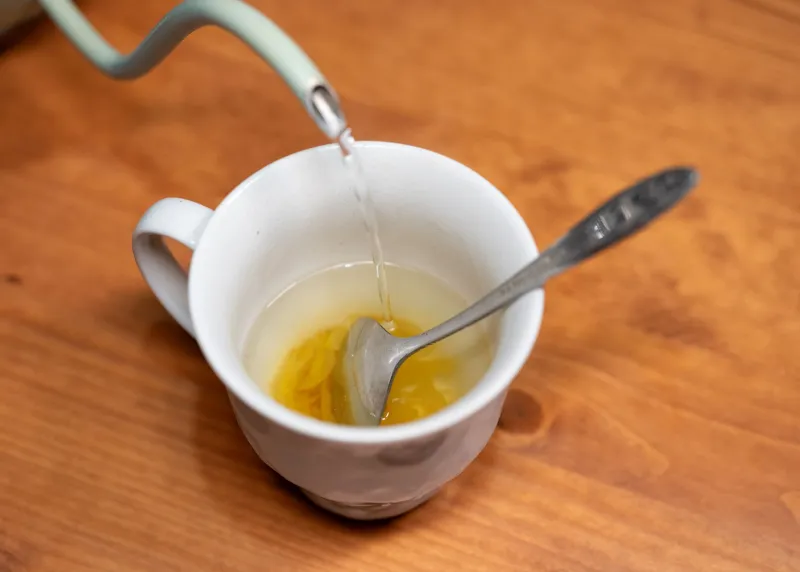
Stir a cup of tea. Wait. Nothing happens. The tea does not un-stir. The milk does not retreat into a neat little spiral. The spoon does not leap back into your hand and ask for another go. This is not a failure of British patience. It is one of the most reliable facts in the universe, and it happens to be a very good place to start talking about quantum thermodynamics.
The spoon is not the villain
At the level of individual atoms and molecules, the rules of physics are broadly reversible. Collide two particles and, in principle, run the film backwards: the maths still works. Yet a mug of tea is a one-way street. Stir it and the motion spreads out, the temperature evens out, the milk mixes. To un-mix it, you would need to catch every molecule in exactly the right place and reverse its motion with absurd precision. Nobody has a spoon that good.
This is the arrow of time, and the usual suspect is entropy. Entropy is often described as 'disorder', which is a bit like describing the British weather as 'damp'. Not wrong, but not the whole story. A better way to think about it is that there are vastly more ways for the tea's energy to be spread around in a mixed-up state than in a neat, stirred vortex. The system drifts towards the arrangement with more possibilities, not because it is malicious, but because there are simply more ways to be ordinary than to be choreographed.
Your cuppa is therefore a tiny thermodynamics demonstration. It is also stubbornly classical. The quantum weirdness that might, in principle, lurk inside those water molecules is washed out by warmth, noise and the sheer number of particles. The tea is not a quantum computer with a biscuit. It is a hot, wet, decohered crowd.
Where quantum thermodynamics gets its kettle
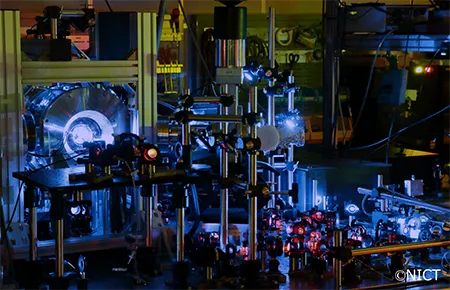
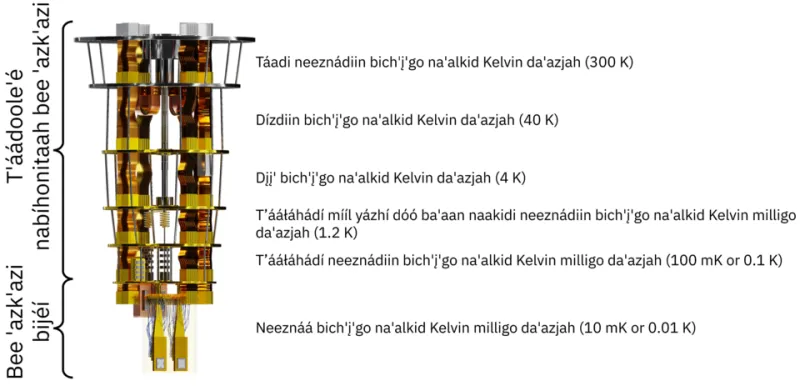
Quantum thermodynamics asks what happens to heat, work and entropy when the system is tiny, cold and coherent enough for quantum effects to matter. Instead of a mug, imagine a single ion, a superconducting circuit, or a cloud of ultracold atoms. These systems can be manipulated with lasers, microwaves and magnetic fields. They can be pushed through cycles, made to absorb and release energy, and occasionally coaxed into doing a small amount of work.
That is the honest version of a 'quantum heat engine'. It is not a boiler with a PhD. It is a microscopic device that converts energy between forms under conditions where quantum rules — superposition, coherence, entanglement — have to be included in the accounting. Researchers in the UK and elsewhere have built and studied such devices, often as tests of fundamental physics rather than as replacements for your gas central heating. Britain's quantum labs, from cold-atom groups to solid-state experimentalists, have a keen interest in these questions because the same tiny systems are relevant to sensing, cooling and quantum computing.
The appeal is not just exotic. At small scales, the usual textbook assumptions get slippery. Heat and work become harder to define cleanly when a system is in a quantum superposition. Coherence can, in some models, be treated as a resource that changes what a tiny engine can do. There are proposals for quantum absorption chillers, quantum batteries and engines that exploit non-classical states. Some of these are elegant thought experiments. Some are real tabletop experiments. Very few are ready to be plumbed into a semi-detached house in Swindon.
The quantum engine test
A useful sceptical rule: ask what is actually being measured. A real quantum heat engine experiment usually involves tiny amounts of energy, careful thermometry and a cycle that can be repeated. The output might be a minuscule amount of work, a temperature change, or a shift in a quantum state. That is genuine physics. It is also a long way from 'quantum heat' as a phrase on a boiler advert.
The second law of thermodynamics has not been suspended. Quantum thermodynamics does not offer a free lunch, a perpetual-motion kettle or a way to un-stir your tea by thinking about it very hard. What it offers is a sharper understanding of how thermodynamic rules emerge from quantum ones, and whether tiny machines can beat classical limits in specific, narrowly defined ways. Some claims are interesting. Some are hype with a kettle on. The difference is usually a calorimeter and a very patient postdoc.
Why your cuppa remains classical
Decoherence is the killjoy. A mug of tea is warm, noisy and full of interactions. Any delicate quantum phase relationship is destroyed almost instantly. The tea behaves as a classical fluid because it is being constantly measured by its own environment — the mug, the air, the spoon, the biscuit crumbs. You cannot quantum-engineer your way around that with a nicer teapot.
That does not make the cuppa useless. It is a reminder that thermodynamics is robust. The arrow of time does not need quantum exotica in your kitchen. It emerges from statistics, probability and the sheer impossibility of tracking every molecule. Quantum thermodynamics matters in the cold, controlled edge cases where those classical assumptions start to fray. Your tea sits comfortably on the classical side of the fence, steaming gently and refusing to rewind.
The brew-test conclusion
So here is the 2026 tea-break verdict. Your cuppa will never un-stir, and no quantum engine will change that. Quantum heat is a real research topic, not a magical energy source. Britain's labs are right to study it, because tiny engines and quantum thermodynamics could matter for cooling, sensing and the fundamentals of what heat even means. But if someone tries to sell you a quantum kettle, check the plug, check the physics, and then put the kettle on yourself.
The tea is a one-way street. Enjoy the walk.